How Many Diapers Does a Newborn Use Per Day?
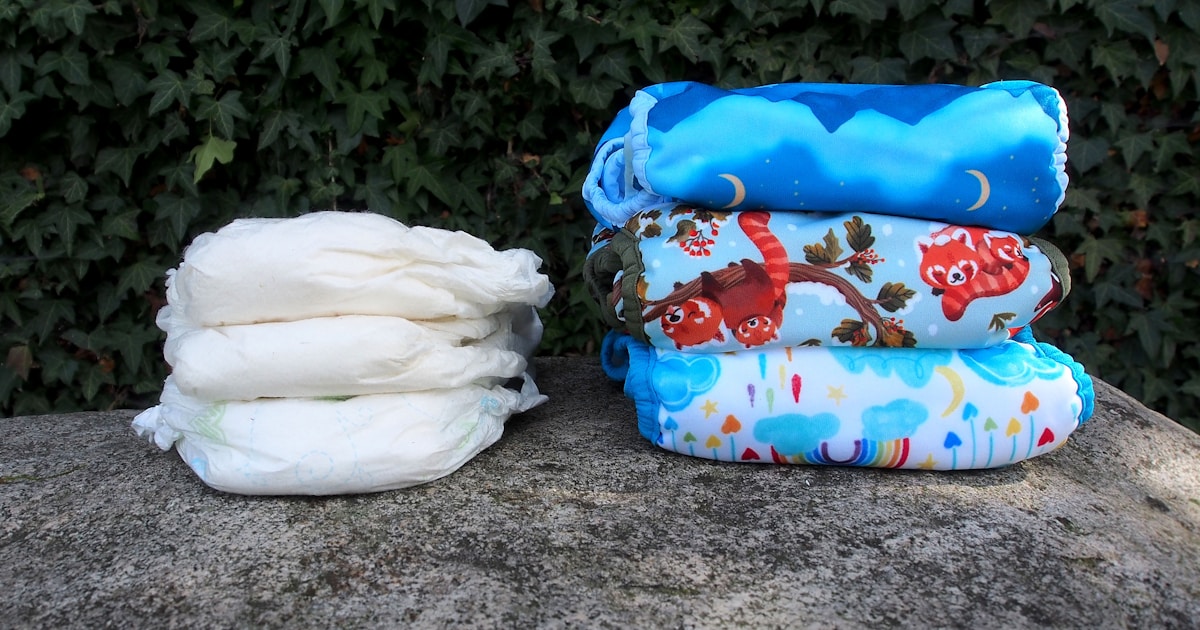
Newborns typically use 10–12 diapers per day in the first month. By month 6, this drops to 6–8 diapers per day. The number of wet and dirty diapers is one of the most reliable signs that your baby is feeding well and staying hydrated.
Diaper Count by Age
| Age | Wet diapers/day | Dirty diapers/day | Total diapers/day |
|---|---|---|---|
| 0–1 month | 6+ | 3–4 | 10–12 |
| 1–2 months | 6+ | 2–3 | 8–10 |
| 2–6 months | 6+ | 1–2 | 6–8 |
| 6–12 months | 6+ | 1–2 | 6–8 |
Source: The American Academy of Pediatrics (AAP) recommends tracking at least 6 wet diapers per day after the first week as a sign of adequate hydration.
Why Diaper Count Matters
Diaper output is one of the simplest ways to monitor your baby's health in the first year:
- Wet diapers indicate hydration. Fewer than 6 wet diapers after day 5 may signal dehydration or insufficient milk intake.
- Dirty diapers indicate digestion and feeding adequacy. The frequency and color of stools change as your baby grows and as their diet evolves from milk to solids.
During the first few days after birth, diaper counts are lower. Your baby passes meconium — a thick, dark, sticky substance — before transitioning to yellow, seedy stools (in breastfed babies) by day 4–5.
What's Normal: Wet Diapers
After the first week, you should see at least 6 wet diapers per day. The urine should be pale yellow and odorless.
- Day 1–2: 1–2 wet diapers (normal — baby is receiving colostrum)
- Day 3–4: 3–4 wet diapers (milk is coming in)
- Day 5+ : 6+ wet diapers (full milk supply established)
If you notice fewer than 6 wet diapers after day 5, or the urine is dark yellow or orange, contact your pediatrician.
What's Normal: Dirty Diapers
Stool frequency varies widely, especially for breastfed babies:
Breastfed babies
- Week 1–4: 3–4 dirty diapers per day (often after every feeding)
- Month 1–6: May decrease to 1–2 per day, or even once every few days (normal if stool is soft)
- Month 6+: Changes again as solid foods are introduced
Formula-fed babies
- Typically 1–2 dirty diapers per day from the start
- Stools are usually thicker and more formed than breastfed babies
Note: After month 1, some breastfed babies go up to 7–10 days without a dirty diaper. This is normal as long as the stool is soft and the baby is feeding well and comfortable. (Source: La Leche League International)
When to Call Your Pediatrician
Contact your doctor if you notice any of the following:
- Fewer than 6 wet diapers in 24 hours (after day 5) — possible dehydration
- No dirty diaper for 3+ days (after month 1) accompanied by fussiness or hard stools — possible constipation
- Stool color changes to red, black (after meconium has passed), or white/pale — may indicate a medical issue
- Urine smells strong or is dark amber — possible dehydration
- Baby seems lethargic or is feeding poorly alongside reduced diaper output
Track Diapers Effortlessly with TrackMy.Baby
Counting diapers in your head is hard — especially at 3 AM. TrackMy.Baby lets you log every diaper change with one tap, from any device. Your partner or caregiver sees updates in real time, so everyone stays on the same page.
- One-tap logging — wet, dirty, or both
- Real-time sync — share with up to 5 family members for free
- Daily and weekly summaries — spot patterns at a glance
- Works offline — log even without internet, syncs automatically when reconnected
- No subscription — pay once, use forever
Sources
- American Academy of Pediatrics (AAP) — Guidelines for newborn hydration and feeding assessment
- La Leche League International — Normal stool patterns in breastfed babies
- Centers for Disease Control and Prevention (CDC) — Infant feeding guidelines
Ready to start tracking?
Join thousands of parents using TrackMy.Baby to track feeding, sleep, and more. No subscription, one-time payment.
Start Tracking for Free